
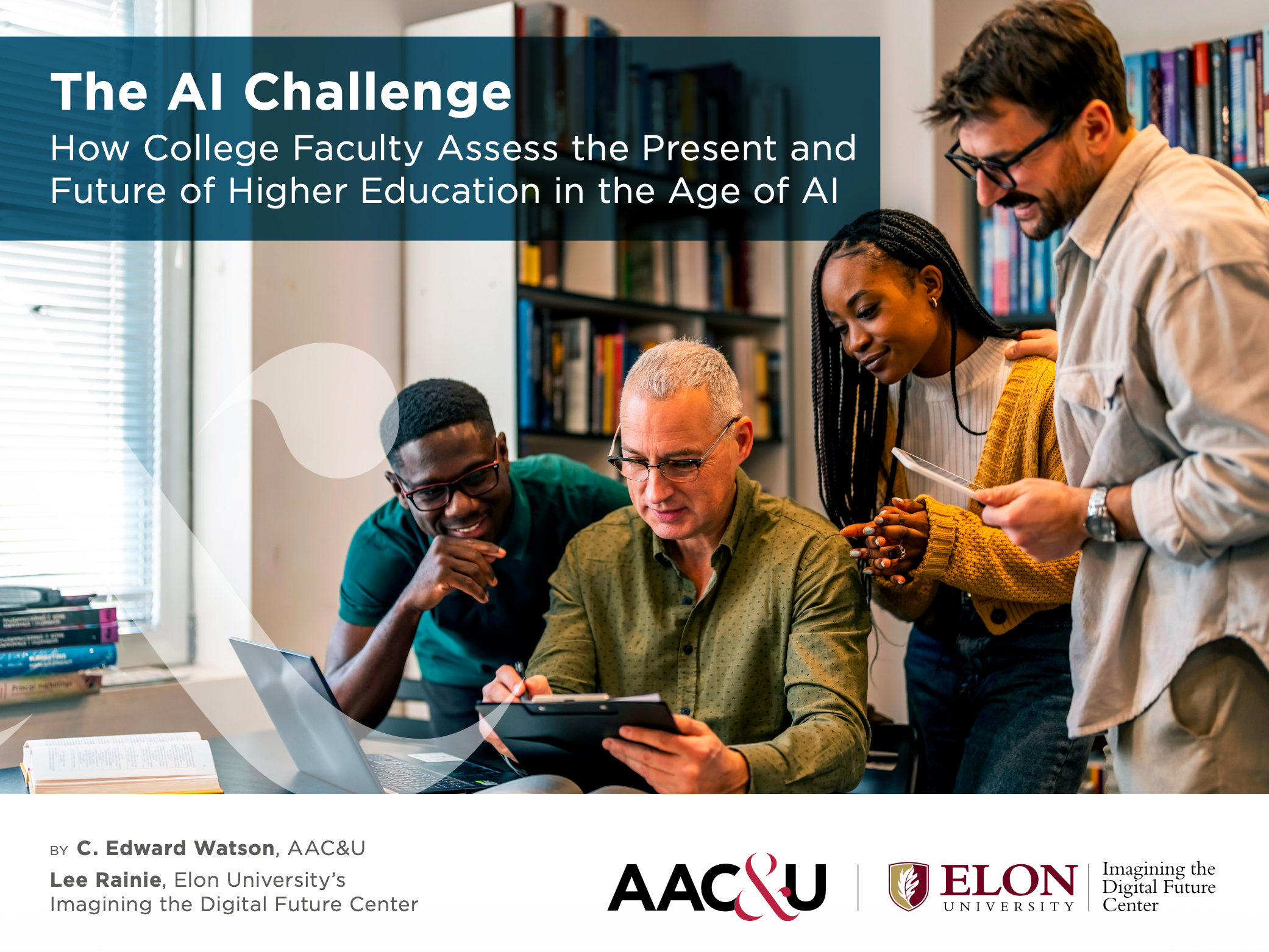
The advent of generative AI technologies in educational settings has sparked a mixture of apprehension and cautious optimism among college faculty, according to a recent survey conducted by the Association of American Colleges and Universities (AAC&U) and Elon University. The survey highlights significant concerns over potential overreliance on AI, which could undermine critical thinking skills and compromise academic integrity.
Concerns Over Student Overreliance
In an era where AI tools like ChatGPT are increasingly accessible, 95% of faculty members expressed fears that students might become overly dependent on these technologies. This dependency could erode essential skills such as critical thinking and problem-solving, which are fundamental to higher education. Faculty members worry that the ease of access to AI-generated content may encourage students to bypass the intellectual rigor traditionally required in academic pursuits.
Potential Benefits and the Need for AI Literacy
Despite these concerns, the survey also revealed that many educators recognize the potential benefits AI can offer. Personalized instruction, which tailors learning experiences to individual student needs, is one such advantage that AI can facilitate. However, the integration of AI into educational frameworks necessitates a balanced approach that includes fostering AI literacy among both students and educators.
"While AI presents opportunities for enhancing personalized learning, it is imperative that we establish clear guidelines to prevent its misuse and ensure it complements, rather than replaces, traditional educational methods," said Dr. Jane Smith, a professor at Elon University and a participant in the survey.
The Call for Clear Guidelines and Leadership
The survey underscores the urgent need for intentional leadership and the development of comprehensive guidelines to govern the use of AI in education. Faculty members advocate for policies that clearly delineate the ethical use of AI tools, ensuring that they augment rather than detract from the educational experience. Such guidelines are crucial to safeguarding academic integrity and maintaining the quality of education.
As educational institutions grapple with the integration of AI technologies, the findings of this survey serve as a crucial reminder of the delicate balance required. While AI holds the promise of revolutionizing education, its implementation must be approached with caution, ensuring that it serves as a tool to enhance, not diminish, the academic journey.
Originally published at https://www.elon.edu/u/news/2026/01/21/elon-aacu-national-survey-95-of-college-faculty-fear-student-overreliance-on-ai/
ResearchWize Editorial Insight
The article highlights a critical tension in contemporary education: the integration of AI technologies versus the preservation of core academic skills. For students and researchers, this matters because it raises questions about the future of learning and the role of technology in shaping intellectual development.
AI tools like ChatGPT offer personalized learning opportunities but risk creating a dependency that could erode critical thinking and problem-solving skills. This is a significant concern for those in academia who value intellectual rigor. The potential for AI to undermine academic integrity by making it easier to bypass traditional learning processes is a systemic risk that requires careful management.
The call for AI literacy and clear guidelines is a crucial takeaway. As AI becomes more embedded in educational frameworks, understanding how to use these tools ethically and effectively is essential. This means not only developing technical skills but also fostering an awareness of AI's broader impact on education and society.
For researchers, the survey underscores the importance of studying AI's long-term effects on educational outcomes. How will AI reshape the landscape of higher education? What systemic changes are necessary to ensure it enhances rather than detracts from learning? These are the big-picture questions that need answers as we navigate this technological frontier.
Looking Ahead
1. AI Literacy as a Core Competency
2. Redefining Academic Integrity With AI's ability to generate content, traditional notions of plagiarism and originality are at stake. Institutions must redefine academic integrity in an AI-driven world. What new policies will emerge to address AI-generated work, and how will they ensure fairness and creativity?
3. Dynamic Curriculum Overhauls Curriculums must evolve at the pace of technology. Static educational models will fail in an AI-driven environment. The question is, will academic institutions remain agile enough to update curriculums continuously, or will they become relics of a bygone era?
4. Regulatory Frameworks Lagging Behind What happens if regulators fall behind? The absence of robust policies might lead to chaotic and inconsistent use of AI in education. It's imperative to establish a regulatory framework that not only guides but anticipates the trajectory of AI advancements.
5. AI as a Pedagogical Partner AI should not replace educators but rather become a partner in pedagogy. How can educators leverage AI to enhance their teaching methodologies, rather than fear it as a competitor? This partnership requires a shift in mindset and training.
6. Empowering Educators Teachers need tools and training to effectively integrate AI into their teaching. Professional development programs must focus on empowering educators to harness AI's potential. If educators remain unprepared, AI's promise will remain unfulfilled.
7. Ethical AI Advocacy The ethical use of AI must be at the forefront of educational discourse. Are institutions ready to champion ethical AI use and instill these values in students? Proactive ethical education will shape the responsible AI leaders of tomorrow.
In a world where AI is rapidly transforming education, institutions must act decisively. The stakes are high; the future of education hangs in the balance. Are we ready to meet the challenge head-on?
Originally reported by https://www.elon.edu/u/news/2026/01/21/elon-aacu-national-survey-95-of-college-faculty-fear-student-overreliance-on-ai/.
Related Articles
- AI in Computer Science Education: Closing the New Digital Divide in K–12
- SUNY Binghamton to partner with six schools in AI education program
- Introducing OpenAI’s Education for Countries
📌 Take the Next Step with ResearchWize
Want to supercharge your studying with AI? Install the ResearchWize browser extension today and unlock powerful tools for summaries, citations, and research organization.
Not sure yet? Learn more about how ResearchWize helps students succeed.