
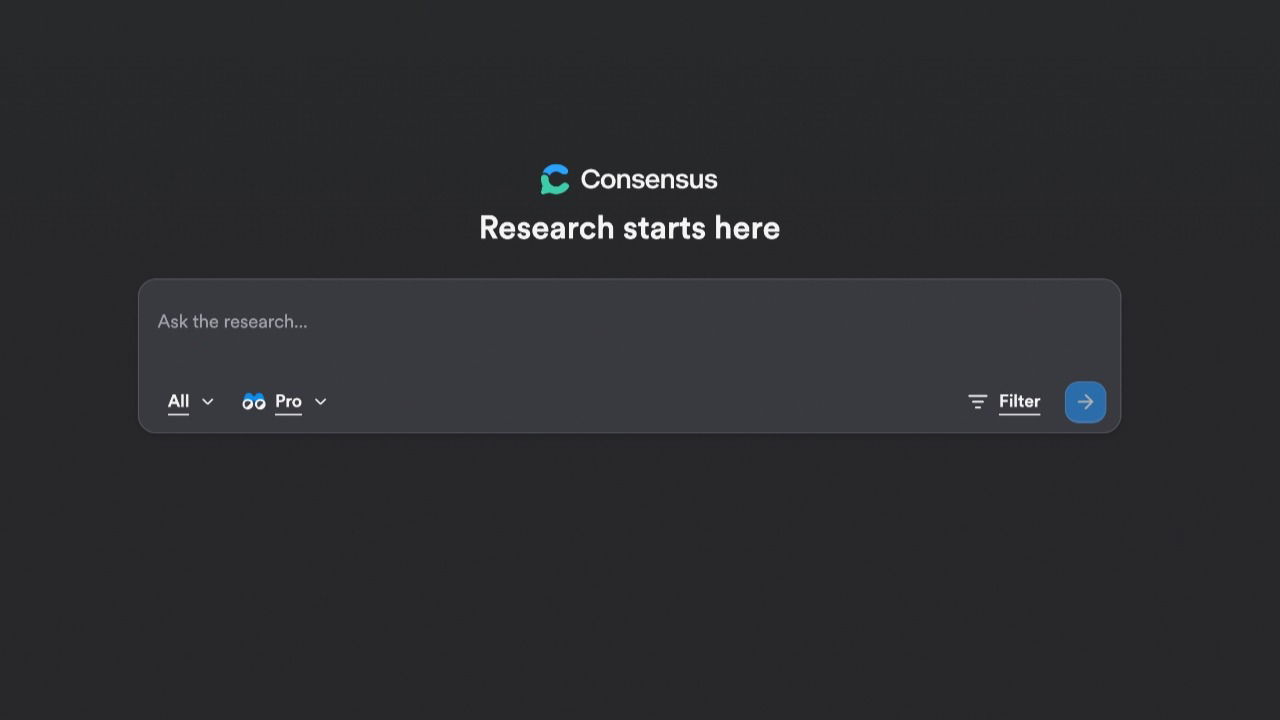
In the rapidly evolving landscape of artificial intelligence, the utility of AI tools in academic settings has become a focal point of discussion. Consensus AI emerges as a noteworthy contender, particularly for those engaged in academic research and the verification of claims. Unlike its counterparts, ChatGPT and Gemini, which are primarily designed to generate summaries and facilitate discussions on open-ended topics, Consensus AI is tailored to provide evidence-backed facts and direct citations from research papers.
The Role of Consensus AI in Academic Research
Consensus AI distinguishes itself by offering a robust platform for academic work. Its primary strength lies in its ability to furnish users with verifiable information, a critical requirement in scholarly activities. This capability is particularly valuable in an era where misinformation and unverified data can easily proliferate. The tool's design prioritizes the integrity and reliability of information, making it an essential resource for researchers who need to substantiate their findings with credible sources.
"Consensus AI is a game-changer for academic research, providing tools that ensure the accuracy and reliability of information—a necessity in today's data-driven world," a research analyst noted.
Limitations and Accessibility
Despite its advantages, Consensus AI is not without limitations. It offers fewer features compared to more expansive generative AI tools. However, this focus on a narrower set of functionalities is a deliberate choice, aimed at enhancing its research capabilities. The platform's emphasis on delivering precise and well-supported information compensates for its limited feature set, particularly for users whose primary need is accuracy over versatility.
Moreover, Consensus AI's accessibility is enhanced through its various pricing plans, which include a free option tailored for students and solo researchers. This ensures that the tool is available to a wide range of users, democratizing access to high-quality research tools and enabling more individuals to participate in academic discourse without financial barriers.
Implications for Educational Policy
The integration of Consensus AI into academic settings holds significant implications for educational policy. As institutions increasingly rely on AI tools, the need for clear guidelines and regulatory frameworks becomes paramount. Ensuring that these tools are used ethically and effectively will require concerted efforts from policymakers, educators, and AI developers alike. The emphasis on evidence-backed research provided by Consensus AI could serve as a benchmark for other AI tools, promoting a standard of accuracy and reliability in educational environments.
Originally published at https://www.maketecheasier.com/consensus-better-ai-for-research/
ResearchWize Editorial Insight
Consensus AI's emergence as a tool tailored for academic research is significant for students and researchers. Its focus on providing evidence-backed facts and direct citations addresses the pressing need for reliable information in academia, where misinformation can easily spread. This tool's design prioritizes accuracy and integrity, which are crucial for substantiating scholarly work.
However, its limited feature set compared to broader AI tools like ChatGPT and Gemini raises questions about its versatility. Is the trade-off between functionality and accuracy justified? For users prioritizing precision, Consensus AI's approach may be ideal, but it might not suit those needing a more comprehensive tool.
The availability of a free plan enhances accessibility, potentially democratizing research capabilities. Yet, how sustainable is this model, and will it maintain quality as user numbers grow?
Educational policy implications are profound. As AI tools integrate into academia, clear guidelines and ethical standards are essential. Consensus AI's emphasis on evidence-backed research could set a benchmark, but will policymakers and educators rise to the challenge of regulating AI's role in education effectively?
Long-term, the tool's impact on research standards and educational policy could be substantial. Will it lead to a more informed academic environment, or will it simply be another tool in the vast AI landscape? The answers to these questions will shape the future of AI in academia.
Looking Ahead
1. Redefining Curriculum: The education system is on the precipice of a seismic shift. AI tools like Consensus AI are not just supplementary resources; they're becoming integral components of the learning process. But will curriculum developers adapt swiftly enough? The current pace of technological advancement threatens to outstrip educational reforms. Schools and universities must urgently embed AI literacy into their curricula, ensuring students are not just consumers of AI but also critical evaluators of its outputs.
2. Policy and Regulation: As AI tools permeate educational settings, the need for robust regulatory frameworks is more pressing than ever. What happens if regulators fall behind? The consequences could be dire—ranging from privacy breaches to the erosion of academic integrity. Policymakers must establish clear guidelines that dictate the ethical use of AI in education, balancing innovation with accountability and security.
3. Teacher Training and Support: Teachers are on the front lines of this transformation, yet many lack the training to effectively integrate AI into their classrooms. Institutions must prioritize professional development, equipping educators with the skills to harness AI's potential while maintaining pedagogical integrity. How can we expect teachers to lead students into the future if they're not adequately prepared themselves?
4. Equity and Access: While tools like Consensus AI offer free access to students, the digital divide remains a significant barrier. Are we inadvertently widening the gap between those with access to cutting-edge technology and those without? Ensuring equitable access to AI tools is essential for democratizing education and fostering an inclusive learning environment.
5. Ethics and Critical Thinking: As AI becomes embedded in education, fostering critical thinking and ethical reasoning is paramount. Students must be taught not only how to use AI tools but also how to question their outputs. Can AI be biased? Are its data sources reliable? Preparing students to navigate these complexities is crucial for cultivating informed, responsible citizens.
In conclusion, the evolution of AI education is fraught with challenges, but it is also ripe with opportunity. Stakeholders must act decisively and collaboratively to shape a future where AI enhances education without compromising its core values. The time for action is now—before the gap between innovation and regulation becomes insurmountable.
Related Articles
- Google's Education AI Tools Reach 10 Million Students in 2025
- Transforming Computer Science Education in the Age of AI
- Major investment in AI – JU part of new research school
📌 Take the Next Step with ResearchWize
Want to supercharge your studying with AI? Install the ResearchWize browser extension today and unlock powerful tools for summaries, citations, and research organization.
Not sure yet? Learn more about how ResearchWize helps students succeed.