
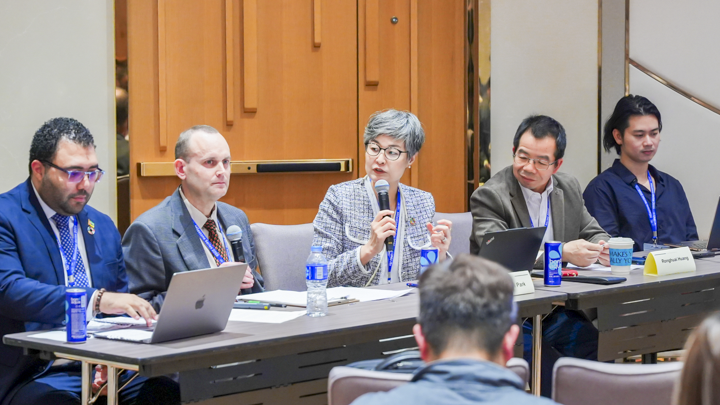
Imagine a future where artificial intelligence (AI) not only assists in personalizing education but also plays a pivotal role in governance. This vision was at the heart of discussions during the UNU Macau AI Conference 2025, where experts from the United Nations University Institute for the Advanced Study of Sustainability (UNU-IAS) gathered to explore AI's transformative potential.
AI Literacy and Inclusive Infrastructure
At the conference, the spotlight was on AI literacy and the development of inclusive infrastructure. These elements are crucial for ensuring that AI technologies are accessible and beneficial to all, regardless of geographical or socio-economic barriers. The experts emphasized that fostering AI literacy is essential for empowering individuals to engage with AI technologies effectively and responsibly.
Regional Adoption Challenges
One of the key topics discussed was the challenge of regional adoption of AI technologies. Different regions face unique obstacles when integrating AI into their educational and governance systems. The conference highlighted the importance of understanding these challenges and developing tailored strategies to overcome them, ensuring that no region is left behind in the AI revolution.
Ethical Governance and Collaboration
Ethical governance was another critical theme at the conference. The experts underscored the need for robust ethical frameworks to guide the development and implementation of AI technologies. Collaboration among global stakeholders was identified as a crucial factor in addressing the ethical and practical challenges posed by AI.
"To harness AI's full potential, we must prioritize ethical governance and foster collaboration across borders," said a UNU-IAS representative. "Only through collective effort can we address the global challenges posed by AI."
The conference served as a reminder of the immense potential AI holds for transforming education and governance. By focusing on AI literacy, inclusive infrastructure, and ethical governance, we can ensure that AI technologies are used to enhance personal growth and societal well-being.
Originally published at https://unu.edu/ias/news/inclusive-use-ai-research-and-higher-education
ResearchWize Editorial Insight
The article "AI's Transformative Potential in Higher Education and Governance" resonates deeply with the evolving landscape of education and the role teachers play in shaping inclusive learning environments. As educators, we are always seeking ways to adapt and enhance our teaching practices to meet the diverse needs of our students. This piece highlights the importance of AI literacy and inclusive infrastructure, which are crucial for ensuring that all students, regardless of their background, can benefit from technological advancements.
For teachers, the emphasis on AI literacy means we must become learners ourselves, embracing new tools and methodologies that AI offers. This is not just about integrating technology into our classrooms but understanding how it can be used to personalize learning, making it more relevant and engaging for each student. Imagine the potential of AI to help us identify learning gaps, tailor instruction, and provide real-time feedback, all while respecting the unique pace and style of each learner.
The article also touches on the challenges of regional adoption of AI technologies, which is particularly relevant for educators working in diverse and under-resourced settings. It reminds us of the importance of advocating for equitable access to technology and resources, ensuring that no student is left behind in this digital age. As teachers, we can play a pivotal role in bridging these gaps by fostering a classroom culture that values and leverages diversity in technological access and usage.
Moreover, the focus on ethical governance and collaboration is a call to action for educators to instill these values in our students. We have the responsibility to guide them in understanding the ethical implications of AI, encouraging critical thinking about how these technologies impact society and individual lives. By fostering discussions around ethics and collaboration, we prepare our students to be thoughtful and responsible digital citizens.
In essence, this article matters because it underscores the transformative potential of AI in education, while also highlighting the critical role teachers play in ensuring that this transformation is inclusive, ethical, and beneficial for all students. It invites us to reflect on our practices, embrace continuous learning, and advocate for a future where technology enhances, rather than hinders, educational equity and excellence.
Looking Ahead
To cultivate this garden, schools will prioritize collaborative projects that encourage students to work together, sharing insights and learning from one another. AI can facilitate this by suggesting groupings based on complementary skills and interests, ensuring that each student feels valued and included. This approach not only enhances learning but also builds empathy and cooperation among peers.
Inclusion will be at the heart of AI education, with technology designed to accommodate diverse learning styles and needs. By providing personalized resources and support, AI can help break down barriers that traditionally hinder some students' progress. This ensures that every child, regardless of background or ability, has the opportunity to flourish.
The emotional side of schooling will gain prominence, with AI helping educators to monitor and support students' well-being. By analyzing patterns in engagement and performance, AI can alert teachers to students who might need additional encouragement or assistance, allowing for timely and compassionate interventions.
As this vision unfolds, teachers will remain central to the educational experience, guiding and inspiring students with their wisdom and care. AI will act as an extension of their capabilities, freeing them to focus more on nurturing the human connections that are essential for meaningful learning.
In this harmonious blend of technology and humanity, the future of AI education promises a world where every student can grow in a supportive and inclusive environment, ready to contribute to a brighter future for all.
Related Articles
- How Teens Use and View AI
- Binghamton University Projects for New Undergraduate Researchers
- UT Launches New School of Computing, Uniting Computer and Data Science, Statistics, Information Disciplines
📌 Take the Next Step with ResearchWize
Want to supercharge your studying with AI? Install the ResearchWize browser extension today and unlock powerful tools for summaries, citations, and research organization.
Not sure yet? Learn more about how ResearchWize helps students succeed.