
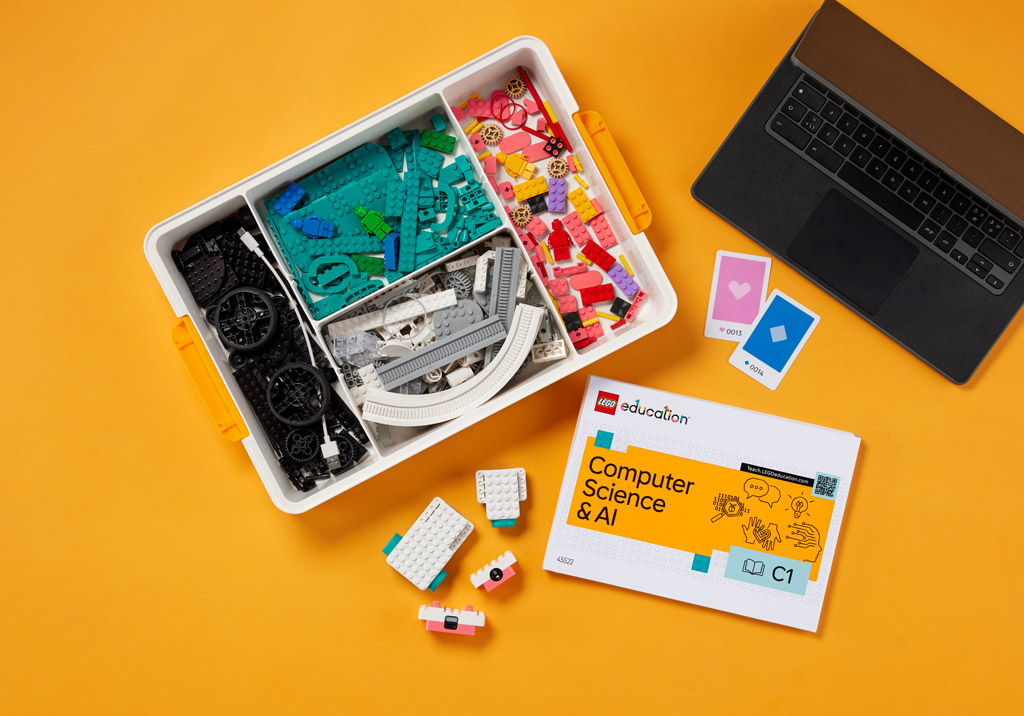
In a significant move to bolster AI literacy among young learners, LEGO Education has announced a new Computer Science & AI learning solution tailored for K-8 classrooms. This innovative educational tool is slated for release in April 2026 and is designed to replace the outgoing LEGO Education SPIKE Portfolio, whose sales will conclude on June 30, 2026.
Addressing the Gap in AI Education
The introduction of this new learning solution comes in response to a growing need for engaging and effective tools to teach computer science and AI in schools. A recent global report underscored the deficits in current educational resources, highlighting a critical gap in AI literacy and the creative application of technology in early education.
LEGO Education's initiative aims to fill this void by providing hands-on, collaborative learning experiences that not only educate but also inspire creativity among young students. By integrating AI into the curriculum, the program seeks to prepare students for a future where digital literacy is paramount.
Implications for Educators and Policymakers
The deployment of such AI-focused educational tools raises several questions about the readiness of educational institutions to integrate advanced technologies into their teaching frameworks. While the potential benefits are substantial, including improved student engagement and enhanced learning outcomes, the risks associated with data privacy and the ethical use of AI in classrooms cannot be overlooked.
"The challenge lies in balancing the innovative potential of AI with the ethical considerations that come with its implementation in educational settings," said Dr. Emily Chen, an expert in educational technologies.
Policymakers will need to develop comprehensive guidelines to ensure that AI tools are used responsibly and that educators are adequately trained to harness their full potential. The success of LEGO's new initiative will largely depend on the ability of schools to adapt to these technological advancements while safeguarding student data and maintaining academic integrity.
The Future of AI in Education
As LEGO Education transitions from the SPIKE Portfolio to this new AI-centric solution, the broader educational landscape is poised for transformation. The integration of AI into early education represents a forward-thinking approach to equipping the next generation with the skills necessary to thrive in an increasingly digital world.
Originally published at https://www.thebrickfan.com/lego-education-computer-science-ai-announced-spike-discontinued/
ResearchWize Editorial Insight
LEGO Education's new AI learning solution is a game-changer for K-8 classrooms. It signals a shift toward integrating AI literacy at an early educational stage, addressing a crucial gap highlighted by recent studies. This move is not just about teaching kids to code; it's about fostering a generation that understands and can creatively apply AI technologies.
For students, this means early exposure to skills that are increasingly vital in the digital age. For researchers, it presents a unique opportunity to study the impacts of AI education on young learners' cognitive development and creativity.
However, the initiative raises critical questions about readiness and ethics. Are schools equipped to handle these advanced tools? How will data privacy be managed? Policymakers must craft guidelines that ensure responsible use while training educators to maximize these technologies' potential.
In the long term, LEGO's initiative could redefine educational norms, making AI literacy as fundamental as reading and math. But will educational institutions keep pace with this rapid technological evolution, or will they lag, leaving students unprepared for future challenges? The stakes are high, and the outcomes uncertain.
Looking Ahead
1. A New Era of Curriculum Design The integration of AI into K-8 classrooms is more than just an upgrade; it's a seismic shift in educational paradigms. As LEGO Education rolls out its AI learning solution, one must ask: Are our current curricula nimble enough to adapt? The current educational frameworks are outdated, often rigid, and ill-prepared for this technological leap. The challenge for curriculum designers is to weave AI literacy seamlessly into the fabric of traditional subjects, ensuring that learning is holistic and interdisciplinary. Failure to do so risks leaving students with fragmented knowledge, unable to see the bigger picture of AI's role in their future careers and daily lives.
2. Teacher Training: The Linchpin of Success Teachers are the architects of tomorrow's classrooms. Yet, how many are equipped to teach AI with confidence? Training programs must be radically reimagined. Educators need robust, ongoing professional development that goes beyond basic AI concepts. They must be empowered to foster critical thinking, ethical reasoning, and creativity among students. Without this, the deployment of AI tools could lead to confusion, misuse, and missed opportunities for meaningful engagement.
3. Ethics and Data Privacy: The Untamed Frontier Introducing AI in schools isn't just about technology; it's about trust. What happens if regulators fall behind on setting clear guidelines for data privacy and ethical AI use? The risk is a Wild West scenario where student data is exploited, and ethical boundaries are blurred. Policymakers must act swiftly to establish stringent, transparent regulations that protect students while allowing educational innovation to flourish. This balance is non-negotiable if we are to avoid a future where AI in education is viewed with suspicion rather than enthusiasm.
4. Equitable Access: Bridging the Digital Divide As AI tools become more prevalent, there's a looming risk of exacerbating existing inequalities. Will all schools, particularly those in underfunded areas, have equal access to these cutting-edge resources? Without proactive measures to ensure equitable distribution, we could see a widening gap where only the privileged benefit from AI education. Policymakers and educational leaders must prioritize funding and support for schools most in need, ensuring that every child has the opportunity to harness AI's potential.
5. Continuous Evaluation: Feedback Loops for Progress The introduction of AI in education is not a one-time event but an ongoing journey. Regular, rigorous evaluation of AI tools and methodologies must be embedded into educational practices. Are these technologies truly enhancing learning outcomes, or are they merely flashy distractions? Feedback loops involving students, teachers, and policymakers are essential to fine-tune approaches and ensure that AI's integration is both effective and meaningful.
In conclusion, the road ahead for AI in education is fraught with both promise and peril. The decisions we make today will shape the future of learning for generations. Will we rise to the challenge, or will we falter under the weight of our own inertia? The clock is ticking, and the future is watching.
Originally reported by https://www.thebrickfan.com/lego-education-computer-science-ai-announced-spike-discontinued/.
Related Articles
- SETDA: AI Beats Cybersecurity as Top State Ed-Tech Priority
- How AI Is Changing College Majors In 2026 – Computer Science, Data Science, Information Science, Statistics
- Bridging smiles: AI-driven dental health awareness for the next gen—a systematic review
📌 Take the Next Step with ResearchWize
Want to supercharge your studying with AI? Install the ResearchWize browser extension today and unlock powerful tools for summaries, citations, and research organization.
Not sure yet? Learn more about how ResearchWize helps students succeed.