
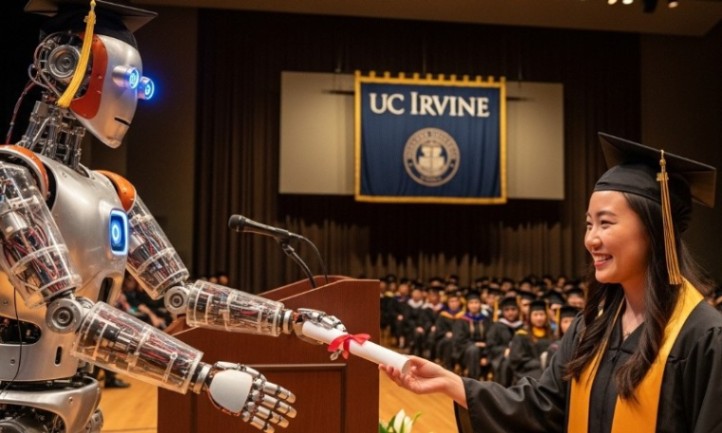
Imagine a world where artificial intelligence seamlessly integrates with scientific research, enhancing our understanding of the universe and driving innovation across disciplines. The University of California, Irvine is making this vision a reality with the launch of its new Master of Applied Artificial Intelligence for Science program, set to begin in Fall 2026.
Empowering the Next Generation of Scientists
This groundbreaking 9-month, in-person program is designed to empower both professionals and graduates by equipping them with AI-driven methods that enhance research capabilities. By focusing on the application of AI in scientific inquiry, UC Irvine aims to bridge the gap between cutting-edge technology and its practical use in scientific exploration.
"Our goal is to create a learning environment where students can harness the power of AI to push the boundaries of scientific research," said Dr. Emily Carter, one of the program's lead developers. "We want to inspire a new generation of scientists who are not only skilled in AI but also adept at applying these tools to solve complex scientific problems."
Integrating AI Across Disciplines
The program's curriculum is designed to be interdisciplinary, allowing students to apply AI techniques across various scientific fields. Whether it's biology, chemistry, physics, or environmental science, the program provides a robust framework for integrating AI into research methodologies, thereby enhancing the depth and breadth of scientific inquiry.
Students will engage in hands-on projects and collaborative research, gaining practical experience that prepares them for the challenges of modern scientific research. The program emphasizes personal growth and development, encouraging students to explore their unique interests and chart their own paths in the world of AI and science.
A Vision for the Future
As we look to the future, the integration of AI into scientific research holds immense potential for discovery and innovation. UC Irvine's Master of Applied Artificial Intelligence for Science program is a significant step towards realizing this potential, offering students the tools and knowledge they need to make meaningful contributions to their fields.
Originally published at https://freedomforallamericans.org/uc-irvine-applied-ai/
ResearchWize Editorial Insight
The article about UC Irvine's new Master of Applied Artificial Intelligence for Science program is a beacon of opportunity for both students and researchers, and it resonates deeply with the evolving landscape of education and scientific inquiry. As educators, we often ponder how best to prepare our students for a future that is increasingly shaped by technology. This program exemplifies a forward-thinking approach, blending AI with scientific research to empower the next generation of scientists.
For teachers, this initiative underscores the importance of integrating technology into the curriculum in meaningful ways. It challenges us to think about how we can incorporate AI tools into our own teaching practices, not just as a subject to be studied, but as a methodology that can enhance learning across disciplines. Imagine a classroom where students use AI to analyze data in biology or simulate chemical reactions in real-time. Such experiences can ignite curiosity and foster a deeper understanding of complex concepts.
In terms of inclusion, the program's interdisciplinary nature is particularly noteworthy. It invites students from diverse scientific backgrounds to engage with AI, breaking down silos that often exist between disciplines. This approach can inspire us to create more inclusive learning environments where students feel empowered to explore and connect different fields of study. By doing so, we not only broaden their academic horizons but also prepare them for collaborative, cross-disciplinary work in their future careers.
For researchers, the program represents a shift towards a more integrated approach to scientific discovery. It highlights the potential of AI to transform research methodologies, offering new tools to tackle complex problems. This is a call to action for researchers to embrace AI not just as a tool, but as a partner in innovation, capable of unlocking new insights and driving progress.
Ultimately, UC Irvine's program is a reminder of the power of education to adapt and evolve. It encourages us to reflect on our own practices and consider how we can better prepare our students for a world where technology and science are inextricably linked. As we guide our students on their educational journeys, let us strive to create learning experiences that are as dynamic and interconnected as the world they will enter.
Looking Ahead
In the ever-evolving landscape of education, AI stands as a bridge, connecting the realms of science and human understanding. As we look ahead, the future of AI education could unfold like a garden, where each student is a unique plant nurtured through collaboration and inclusion.
Imagine classrooms where students from diverse backgrounds come together, each bringing their own experiences and perspectives. In this garden of learning, AI acts as a tool to cultivate curiosity and innovation. Students work in teams, much like gardeners tending to a shared plot, learning not just from textbooks but from each other. This collaborative approach ensures that every voice is heard, and every idea is valued, creating a rich tapestry of knowledge and creativity.
Inclusion becomes the soil in which this garden thrives. By designing AI education that is accessible to all, we ensure that no student is left behind. This means creating resources that accommodate different learning styles and abilities, making sure that every student can engage with AI in a way that feels natural and empowering. By doing so, we foster an environment where students feel supported and confident in exploring new ideas and technologies.
The emotional side of schooling is the sunlight that nurtures this garden. Educators play a crucial role in creating a safe and welcoming space where students can express themselves openly. By focusing on emotional intelligence alongside technical skills, we prepare students not just to be proficient in AI, but to be empathetic and thoughtful individuals. This balance helps students develop resilience and adaptability, essential traits for navigating the complexities of the modern world.
As we nurture this garden of AI education, we plant the seeds for a future where students are not just passive consumers of technology but active contributors to its development. By fostering collaboration, inclusion, and emotional growth, we equip them with the tools they need to make meaningful contributions to society, creating a brighter and more innovative future for all.
Originally reported by https://freedomforallamericans.org/uc-irvine-applied-ai/.
Related Articles
- How AI is transforming academic research
- AI Literacy Essentials for Academic Libraries
- Gibbs College Hosts Panel on AI’s Growing Role in Education and Research
📌 Take the Next Step with ResearchWize
Want to supercharge your studying with AI? Install the ResearchWize browser extension today and unlock powerful tools for summaries, citations, and research organization.
Not sure yet? Learn more about how ResearchWize helps students succeed.