
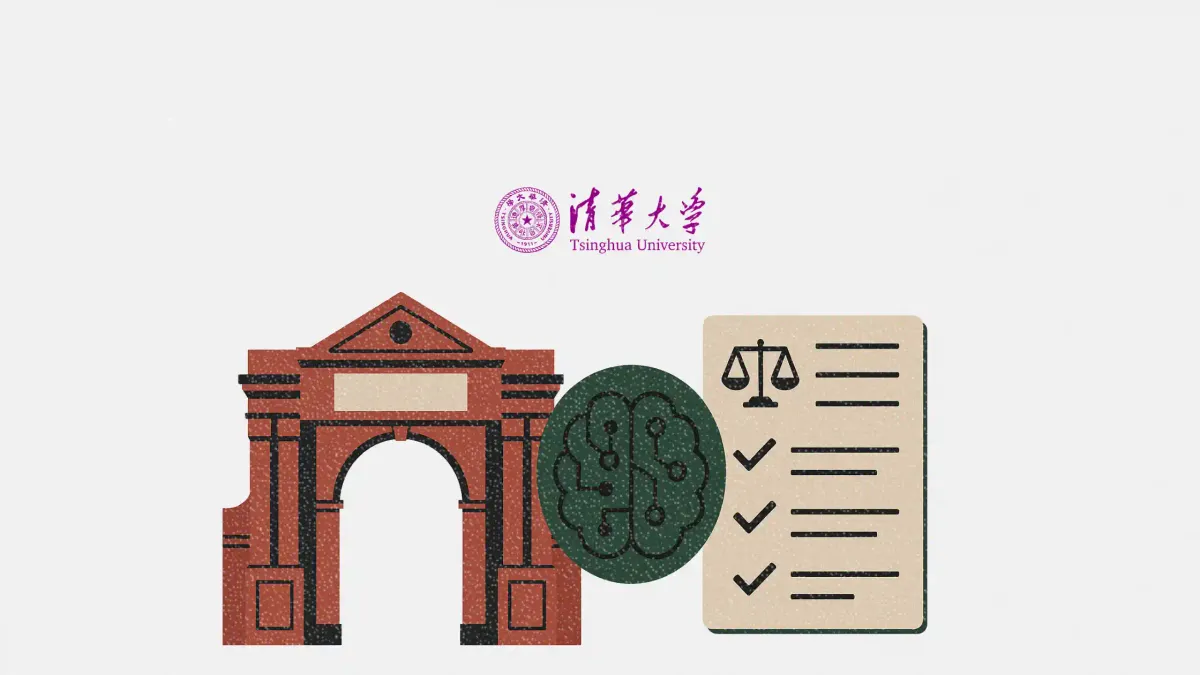
Tsinghua University has taken a significant step forward in the responsible integration of artificial intelligence within educational environments. By introducing a comprehensive framework, the institution underscores the critical importance of maintaining ethical boundaries while leveraging AI as a complementary tool to human intellectual efforts. This initiative is poised to serve as a benchmark for universities globally, particularly in an era where AI's role in education is rapidly expanding.
Ethical Boundaries and AI's Role
The framework established by Tsinghua University is centered around the principle that AI should function as a supportive tool rather than a replacement for human intellectual labor. This distinction is crucial in preserving the integrity of educational processes and ensuring that AI is utilized to enhance, rather than undermine, human capabilities. The guidelines explicitly prohibit practices such as plagiarism and unauthorized data use, setting a standard for ethical conduct in AI applications.
Transparency and Bias Mitigation
One of the core tenets of Tsinghua's framework is the emphasis on transparency. The guidelines advocate for clear communication regarding AI's role in educational settings, ensuring that all stakeholders are aware of the technology's capabilities and limitations. Additionally, the framework highlights the necessity of bias mitigation, recognizing that unchecked AI systems can perpetuate or even exacerbate existing biases. By prioritizing these aspects, Tsinghua University is advocating for a more equitable and fair educational landscape.
Human Oversight and Accountability
Another critical component of the framework is the emphasis on human oversight. AI systems, while powerful, are not infallible and require continuous monitoring to ensure they align with educational objectives and ethical standards. The framework stresses the importance of human accountability in AI integration, ensuring that educators and administrators remain at the helm of decision-making processes. As stated in the framework, "The role of AI is to augment human potential, not to replace it," a sentiment that reflects the university's commitment to preserving the human element in education.
"The role of AI is to augment human potential, not to replace it." — Tsinghua University Framework
A Global Benchmark
As educational institutions worldwide grapple with the challenges and opportunities presented by AI, Tsinghua University's framework offers a model for responsible and ethical integration. By prioritizing transparency, bias mitigation, and human oversight, the university is setting a precedent that other institutions would do well to follow. In doing so, Tsinghua is not only safeguarding academic integrity but also paving the way for a future where AI and human intellect coexist harmoniously in educational settings.
Originally published at https://www.contentgrip.com/tsinghua-university-ai-guidelines/
ResearchWize Editorial Insight
Tsinghua University's AI framework is a pivotal development for students and researchers, setting a precedent for ethical AI integration in education. As AI becomes ubiquitous, the framework's emphasis on ethical boundaries, transparency, and human oversight serves as a critical guide. It addresses key concerns like plagiarism, unauthorized data use, and bias, ensuring AI enhances rather than undermines human capabilities.
For students, this framework could shape how AI tools are used in learning environments, influencing everything from research methodologies to assessment integrity. Researchers, on the other hand, can look to Tsinghua's model as a benchmark for developing AI systems that prioritize ethical considerations and mitigate biases.
The big question is: Will other institutions adopt similar frameworks, and how will this influence global educational standards? The long-term effects could redefine the balance between AI and human intellect in academia, potentially setting a new standard for ethical AI usage worldwide. Are we witnessing the beginning of a global shift towards more responsible AI practices in education?
Looking Ahead
1. Curriculum Overhaul is Non-Negotiable
AI's capabilities are evolving at breakneck speed. Educational curriculums must undergo a radical transformation to keep pace. Are we ready to teach students not just how to use AI but how to question it, dissect it, and improve it? Without this shift, we risk producing graduates equipped with yesterday's skills in a world driven by tomorrow's technology.
2. Ethics as a Core Subject
Teaching AI without instilling a deep understanding of ethics is like handing over a loaded weapon without a safety manual. Ethics must transition from a supplementary topic to a core subject within AI education. How do we ensure students internalize the ethical implications of their work with AI? This question will define the moral compass of future tech leaders.
3. Dynamic Regulatory Frameworks
What happens if regulators fall behind? The gap between AI innovation and regulatory oversight is widening. Educational institutions must collaborate with policymakers to develop dynamic regulatory frameworks that evolve alongside technological advancements. Only then can we safeguard against misuse and ensure AI serves the public good.
4. AI Literacy for All
AI education cannot remain the preserve of tech specialists. We must democratize AI literacy, integrating it into disciplines ranging from the humanities to the sciences. Will our traditional silos of education adapt fast enough to produce well-rounded individuals who can navigate an AI-driven society?
5. Global Collaboration and Standards
AI knows no borders, and neither should our educational strategies. Tsinghua University's framework is a promising start, but global collaboration is essential. Can we establish international standards for AI education that transcend cultural and political differences? Without a unified approach, disparities in AI proficiency and ethics will only widen.
6. Continuous Learning and Adaptation
The AI landscape is in constant flux; education must be, too. Institutions need to embrace a model of continuous learning, where educators and students alike are perpetual learners. How can we institutionalize this mindset in a system historically resistant to change?
In conclusion, the evolution of AI education demands more than incremental adjustments. It calls for a seismic shift in how we teach, what we teach, and who we teach. The stakes are high, and the time to act is now. Will we rise to the challenge, or will we let the future outpace us?
Originally reported by https://www.contentgrip.com/tsinghua-university-ai-guidelines/.
Related Articles
- UC Irvine launches Master of Applied Artificial Intelligence for Science Program
- Students express hope — and fear — over classroom AI use
- DGIST Launches “AI/SW School,” an Advanced Talent Education Platform for Local AI/SW
📌 Take the Next Step with ResearchWize
Want to supercharge your studying with AI? Install the ResearchWize browser extension today and unlock powerful tools for summaries, citations, and research organization.
Not sure yet? Learn more about how ResearchWize helps students succeed.